Loading image...

Loading image...

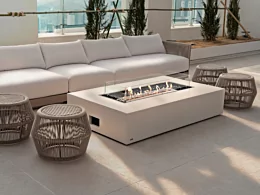
Choisir une table cheminée ne devrait pas être intimidant. Pourtant, la plupart des acheteurs se perdent dans un dédale de comparaisons de combustibles, de jargon de sécurité et de conseils contradictoires. Quel type de combustible convient à votre espace ? Peut-on vraiment en utiliser une à l’intérieur ? Qu’est-ce qui distingue une construction de qualité d’un simple discours marketing ? Ce guide complet répond à toutes les questions et vous aide à choisir une table cheminée qui apporte chaleur, ambiance et valeur durable.
Loading image...
Loading image...
Se réunir autour d’une cheminée a quelque chose de magnétique. Elle attire les personnes, suscite les conversations et transforme les moments ordinaires en souvenirs mémorables. Si vous rêvez d’apporter cette chaleur et cette connexion à votre espace de vie extérieur, voire à votre intérieur, vous avez sans doute découvert les tables cheminées au fil de vos recherches. Et cette découverte a probablement soulevé plus de questions qu’elle n’a apporté de réponses.
Quel type de combustible correspond à votre mode de vie ? Pouvez-vous réellement en utiliser une à l’intérieur de votre maison ? Qu’est-ce qui distingue une table cheminée de qualité d’un modèle qui décevra en une saison ? Ces questions laissent de nombreux propriétaires désemparés avant même d’avoir commencé.
Ce guide dissipe la confusion. Vous découvrirez les différences fondamentales entre les tables de cheminées et les braseros éthanol traditionnels, comprendrez les performances de chaque option de combustible en conditions réelles et disposerez des connaissances nécessaires pour choisir en toute confiance une table cheminée qui sublimera votre espace pendant des années. Que vous conceviez un espace de réception alfresco raffiné ou recherchiez un point focal intérieur saisissant, les conseils qui suivent vous aideront à prendre une décision dont vous serez fier.
Une table cheminée est un meuble feu qui associe l’ambiance d’une flamme vivante à la praticité d’une véritable surface de table. Contrairement aux éléments de feu autonomes, placés à l’écart de l’espace de vie, les table cheminées s’intègrent naturellement à votre environnement comme de véritables meubles. Elles offrent une surface pour les verres, les assiettes ou les objets décoratifs, tout en créant une flamme captivante en leur centre.
Leur popularité croissante s’explique par une évolution profonde de notre manière d’habiter la maison. Les espaces de vie extérieurs ne sont plus des ajouts secondaires : ils deviennent des prolongements des intérieurs, avec les mêmes exigences de design, de confort et de fonctionnalité. Une table de cheminée répond au désir d’un élément de feu qui ne domine pas l’espace, tout en offrant la chaleur et l’atmosphère qui rendent les moments de réception en extérieur vraiment agréables.
Loading image...
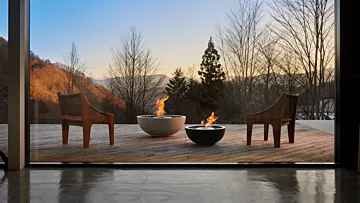
La distinction entre table cheminées et braseros dépasse la simple question de vocabulaire. Les braseros présentent généralement une cuve ou un foyer plus profond, principalement conçu pour contenir le feu, le rebord périphérique n’étant qu’un complément. Ils sont pensés comme des éléments autonomes, nécessitant une disposition de sièges séparée.
Les table cheminées sont d’abord conçues comme des meubles. La flamme est placée dans un brûleur encastré au sein de la structure de la table, laissant une surface utilisable sur le pourtour. Cette approche permet à vos invités de poser un verre de vin à côté des flammes dansantes, sans devoir tendre le bras vers des tables d’appoint comme l’imposent souvent les installations de braseros traditionnels.
Les implications pratiques sont importantes. Une table cheminée permet de préserver l’échelle intime d’un espace de conversation sans renoncer à l’élément feu. La flamme devient partie intégrante de l’ensemble mobilier, plutôt qu’une destination séparée.
Loading image...
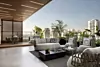
 © Moran Gozali Interior Architecture / Photo: Ruslan & Gali Paul
 Les êtres humains se rassemblent autour des flammes depuis des millénaires, et cet instinct reste étonnamment puissant. Placez une table cheminée au centre d’un salon modulable, et vous créez instantanément un point d’ancrage social. Les invités s’orientent naturellement vers la flamme, tournés vers l’intérieur et les uns vers les autres, plutôt que dispersés dans l’espace.
La chaleur diffusée vers l’extérieur prolonge votre saison de réception, permettant des moments confortables lors de soirées d’automne fraîches ou de nuits de printemps vives qui auraient autrement ramené tout le monde à l’intérieur. La flamme elle-même agit comme un catalyseur naturel de conversation. Contrairement aux écrans de télévision qui captent l’attention, le feu offre un intérêt visuel doux, qui enrichit les échanges sans les dominer.
Loading image...

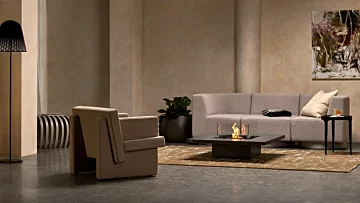
C’est ici que les table cheminées révèlent une capacité qui surprend de nombreux propriétaires : certains modèles peuvent être utilisés aussi bien à l’intérieur qu’à l’extérieur. Cette polyvalence dépend entièrement du type de combustible, le bioéthanol étant la seule option certifiée pour une utilisation en intérieur.
Les table cheminées au bioéthanol ne nécessitent ni conduit, ni cheminée, ni ventilation permanente, car elles ne produisent ni fumée, ni suie, ni émissions nocives. La combustion génère uniquement de la chaleur, de la vapeur d’eau et une quantité minimale de dioxyde de carbone, à peu près équivalente à celle de deux bougies. Cette combustion propre ouvre des possibilités que les options au gaz ne peuvent tout simplement pas offrir.
Pour les applications intérieures, des composants de sécurité spécifiques deviennent obligatoires. Les table cheminées au bioéthanol conformes comprennent un Indoor Safety Tray et un Efficiency Ring, qui doivent être installés avant l’utilisation. Ces composants garantissent que l’appareil répond aux exigences de la certification EN 16647 pour les cheminées décoratives au bioéthanol.
Imaginez une table de cheminée dans votre salon, servant à la fois de table basse et de point de flamme captivant pendant les soirées d’hiver. Ou envisagez une pièce extérieure couverte où la même table cheminée accompagne les saisons sans permis complexes ni raccordement au gaz. Cette flexibilité constitue un véritable avantage qui distingue les table cheminées au bioéthanol des options traditionnelles.
La source de combustible influence pratiquement toutes les autres décisions concernant votre table cheminée, des possibilités d’installation à l’usage quotidien. Comprendre les avantages réels et les limites de chaque option vous permet de choisir en fonction de votre mode de vie.
| Caractéristique | Bioéthanol | Gaz naturel | Propane (GPL) |
|---|---|---|---|
| Usage intérieur | Oui (avec composants de sécurité) | Non | Non |
| Installation | Aucune requise | Raccordement au gaz par un professionnel | Minimale |
| Alimentation en combustible | Bouteilles rechargeables | Illimitée (raccordée) | Remplacement de bouteille |
| Portabilité | Excellente | Emplacement fixe | Bonne |
| Puissance calorifique | 12 860-20 433 BTU/h | Jusqu'à 65 000 BTU/h | Jusqu'à 65 000 BTU/h |
| Durée de combustion | 7-13 heures par remplissage | Illimitée | 8-20 heures par bouteille |
| Impact environnemental | Neutre en carbone | Combustible fossile | Combustible fossile |
Le bioéthanol représente une approche fondamentalement différente des éléments de cheminée. Produit par fermentation et distillation de sucres végétaux, généralement issus de la canne à sucre, il brûle avec une remarquable propreté. Sa combustion génère de la chaleur, de la vapeur et du dioxyde de carbone réabsorbé par les plantes lors de la photosynthèse, créant ainsi un cycle neutre en carbone.
Les bénéfices pratiques découlent directement de cette combustion propre. Sans fumée ni émissions nocives, les tables de cheminées au bioéthanol ne nécessitent ni conduit, ni cheminée, ni système de ventilation permanent. Cela supprime les principaux obstacles à l’installation d’un élément de cheminée : travaux coûteux, permis et entretien continu de la ventilation.
La flamme offre une couleur orange naturelle et un mouvement doux, proche de la danse organique d’un feu de bois traditionnel plutôt que des flammes uniformes bleutées des brûleurs à gaz. Nombre de propriétaires trouvent cette esthétique plus séduisante dans les espaces résidentiels où l’ambiance compte autant que la puissance calorifique.
La puissance calorifique varie d’environ 12 860 BTU/h avec des composants d’efficacité à 20 433 BTU/h au réglage maximal, assez pour réchauffer des espaces intérieurs de plus de 60 mètres carrés. Une autonomie de sept à treize heures permet de prolonger plusieurs soirées sans interruption.
La contrepartie réside dans le ravitaillement. Il faut éteindre la flamme, laisser refroidir le brûleur, puis remplir manuellement avec du bioéthanol avant de rallumer. Pour de nombreux utilisateurs, cette pause occasionnelle reste un léger inconvénient, largement compensé par la simplicité d’installation et la possibilité d’usage intérieur qu’aucun autre combustible n’offre.
Les tables de cheminées au gaz naturel se raccordent directement à l’alimentation en gaz existante de votre maison, offrant une flamme à la demande sans gestion du combustible. Tournez une vanne ou appuyez sur un bouton d’allumage, et la flamme apparaît. Cette commodité séduit les propriétaires qui privilégient une utilisation fluide avant toute autre considération.
La puissance calorifique dépasse nettement celle des alternatives au bioéthanol, de nombreux modèles atteignant jusqu’à 65 000 BTU/h. Cette puissance supérieure crée une chaleur substantielle pour les grands espaces extérieurs et prolonge le confort d’utilisation lorsque les températures baissent.
Toutefois, un raccordement au gaz par un professionnel est obligatoire, avec tranchées pour les conduites et permis éventuels. La table de cheminée devient un élément permanent, son emplacement étant déterminé par l’arrivée de la conduite de gaz. Les tables de cheminées au gaz naturel sont certifiées uniquement pour l’extérieur, car les gaz de combustion doivent se dissiper à l’air libre.
Le propane offre une voie intermédiaire entre la portabilité du bioéthanol et la commodité du gaz naturel. Le combustible arrive en bouteilles portables, fournissant une puissance calorifique importante sans infrastructure permanente. Comme le gaz naturel, les brûleurs au propane offrent des performances thermiques impressionnantes, généralement jusqu’à 65 000 BTU/h.
L’avantage pratique réside dans la flexibilité de repositionnement. Contrairement aux installations au gaz naturel fixées à un seul emplacement, les tables de cheminées au propane peuvent évoluer avec vos besoins de réception. Organisez une réunion à une extrémité de la terrasse cette semaine, puis rapprochez la table cheminée de la piscine le mois prochain.
La limite est la même que pour le gaz naturel : les tables de cheminées au propane sont certifiées uniquement pour l’extérieur, quelles que soient les conditions de ventilation.
La sécurité des braseros ne consiste pas seulement à éviter les dangers évidents. Les risques les plus importants proviennent de défauts de conception subtils : des matériaux qui se dégradent de manière invisible, des systèmes de combustible qui permettent le surremplissage ou une construction qui ne gère pas correctement le transfert de chaleur.
Les tables de cheminées de qualité disposent de plusieurs certifications délivrées par des laboratoires d’essai reconnus :
UL 1370 est la norme américaine applicable aux appareils décoratifs sans évacuation fonctionnant avec un combustible à base d’alcool. Les produits homologués selon cette norme ont subi des essais rigoureux portant sur la rétention du combustible, les émissions de chaleur, les caractéristiques de combustion et l’intégrité structurelle.
EN 16647 correspond à la norme européenne établie par la British Standards Institution. Cette certification exige le respect de paramètres de fonctionnement précis, notamment une capacité maximale de combustible et des composants de sécurité obligatoires pour une utilisation en intérieur.
ACCC Safety Mandate garantit que les produits répondent aux exigences de l’Australian Competition and Consumer Commission.
Pour les tables de cheminées à gaz, recherchez les certifications ANSI Z21.97-2017 et CSA 2.41-2017. Les marchés européens et britanniques exigent la conformité au Gas Appliance Regulation 2016/426, indiquée par les marquages CE et UKCA.
Ces certifications ne sont pas de simples arguments marketing. Elles représentent un investissement important dans des essais indépendants et un contrôle qualité continu, que les fabricants à bas prix ne peuvent tout simplement pas égaler.
Les tables de cheminées premium intègrent plusieurs systèmes de sécurité complémentaires :
Points de remplissage dédiés sur les modèles au bioéthanol séparent la zone de ravitaillement de l’ouverture du brûleur. Un bec verseur conçu à cet effet repose sur une plaque dans le point de remplissage, évitant le surremplissage et les éclaboussures.
Systèmes de verrouillage empêchent l’accès au point de remplissage lorsque la glissière du brûleur est ouverte, garantissant l’extinction de la flamme avant le ravitaillement.
Top Trays protègent contre le transfert de chaleur tout en recueillant les déversements.
Efficiency Rings augmentent l’efficacité de fonctionnement tout en stabilisant le comportement de la flamme ; ils deviennent obligatoires pour la conformité EN 16647 en intérieur.
Un positionnement approprié protège à la fois les personnes et les biens :
Dégagements latéraux par rapport au mobilier fixe doivent maintenir un minimum de 600 mm depuis la flamme.
Dégagements en hauteur exigent 2000 mm par rapport aux éléments mobiles comme les rideaux ou les branches, et au moins 1829 mm jusqu’aux plafonds fixes.
Exigences de circulation d’air imposent une installation sur des surfaces dures et planes permettant la circulation sous l’unité. La plupart des tables de cheminées disposent de pieds articulés réglables qui maintiennent l’espace d’air minimal de 12,5 mm.
Volumes minimaux de pièce pour l’utilisation intérieure au bioéthanol varient selon la capacité du brûleur. Les brûleurs AB8 standard exigent un volume minimal de 116 mètres cubes.
Les matériaux qui composent votre table cheminée déterminent non seulement son apparence initiale, mais aussi son aspect et ses performances pour les années à venir.
Fluid Concrete associe l'esthétique du béton à des caractéristiques adaptées au mobilier de feu. Le matériau est étonnamment léger au regard de sa densité visuelle, ce qui simplifie la livraison et le repositionnement. Une barrière résistante aux taches et aux chocs protège contre les intempéries et l'exposition aux UV. Disponible dans les coloris Natural, Graphite et Bone.
Teck premium représente le choix traditionnel pour un mobilier d'extérieur durable. Considéré comme le bois dur commercial le plus résistant, le teck contient des huiles naturelles qui offrent une résistance inhérente à l'humidité, aux insectes et à la dégradation. Avec le temps, le teck exposé développe une patine gris argent distinctive, tandis qu'un traitement périodique à l'huile préserve sa couleur dorée d'origine.
| Caractéristique | Fluid Concrete | Teck premium |
|---|---|---|
| Durabilité | Résistant aux taches et aux chocs | Naturellement résistant aux intempéries |
| Résistance aux UV | Excellente | Excellente |
| Esthétique | Moderne, industrielle | Chaleureuse, naturelle |
| Entretien | Nettoyage d'un simple geste | Traitement à l'huile optionnel |
L'acier inoxydable de grade 304 est devenu la référence du secteur pour les brûleurs de qualité, offrant une excellente résistance à la corrosion et une stabilité structurelle lors de cycles de chauffe répétés.
Les finitions de brûleur comprennent l'acier inoxydable poli pour les ambiances contemporaines, ou un revêtement céramique noir qui s'efface visuellement pour laisser la flamme capter l'attention. Le charbon décoratif en verre noir, fabriqué en verre trempé, recouvre l'intérieur du brûleur tout en résistant aux cycles thermiques sans décoloration.
Tenez compte du poids visuel lorsque vous choisissez l'échelle et la finition. Les grands salons modulaires s'accordent naturellement avec de plus grandes tables cheminées Fluid Concrete. Les ensembles de mobilier plus légers peuvent mieux convenir à la chaleur organique du teck ou aux proportions de modèles compacts.
La coordination des hauteurs compte plus que beaucoup d'acheteurs ne l'imaginent. Les hauteurs standard de table basse fonctionnent avec des assises lounge profondes, tandis que les hauteurs repas ou bar conviennent aux configurations de chaises droites. Les collections de mobilier d'extérieur Blinde Design sont spécifiquement conçues pour s'accorder avec l'esthétique et les proportions des tables cheminées.
Une table cheminée d’un mètre carré nécessite environ 2,2 mètres carrés d’espace au sol en incluant les dégagements requis. Tenez compte des flux de circulation et des largeurs de passage après avoir intégré à la fois la table cheminée et les assises environnantes.
| Style de modèle | Dimensions types (L x l x H) | Idéal pour |
|---|---|---|
| Carré compact | 776 x 776 x 340mm | Petites cours, balcons |
| Carré standard | 1000 x 1000 x 340mm | Terrasses moyennes |
| Rectangulaire | 1270 x 762 x 296mm | Agencements d’assises plus longs |
| Grand linéaire | 2272 x 1098 x 345mm | Grandes pièces extérieures |
Hauteur basse (250–340mm) : fonctionne comme une table basse avec des assises lounge profondes.
Hauteur conversation (595mm) : place la flamme plus près du niveau des yeux en position assise pour une contemplation intime.
Hauteur repas (745mm) : sert de pièce maîtresse pour les repas en extérieur avec des chaises autour.
Hauteur bar (1045mm) : s’associe à une station debout ou à des tabourets de bar pour recevoir en toute décontraction.
Les tables cheminées au bioéthanol délivrent de 12 860 à 20 433 BTU/h, offrant une chaleur d’appoint confortable dans un rayon de deux à trois mètres. Les tables cheminées à gaz délivrent jusqu’à 65 000 BTU/h, avec une portée plus importante dans les grands espaces extérieurs.
Aucun des deux types de combustible n’est conçu comme chauffage principal. Ils apportent une chaleur d’appoint et de l’ambiance, plutôt que de remplacer les systèmes de chauffage des espaces intérieurs.
Une table cheminée de qualité représente un investissement important dans votre espace de vie extérieur. Comprendre les exigences d'entretien et les options d'accessoires vous aide à protéger cet investissement tout en optimisant sa polyvalence.
Les tables cheminées modernes demandent remarquablement peu d'entretien par rapport aux alternatives à bois. Pas de cendres à retirer, pas de ramonage, pas de gestion du bois de chauffage.
Les entourages en Fluid Concrete se nettoient simplement avec un chiffon humide. Le teck bénéficie d'un nettoyage saisonnier au savon doux, suivi d'un traitement à l'huile facultatif. Les brûleurs éthanol peuvent même être lavés à l'eau chaude, voire placés au lave-vaisselle, pour éliminer entièrement les résidus de combustible.
Les composants en acier inoxydable doivent être essuyés périodiquement, notamment en environnement côtier où le sel accélère la détérioration. Les housses de protection toutes saisons empêchent l'accumulation de poussière, l'infiltration d'eau et la dégradation due aux UV pendant le stockage.
Les écrans en verre pour cheminée stabilisent les flammes par temps venteux tout en offrant une barrière de sécurité supplémentaire. Fabriqués en verre trempé résistant, ils supportent les contraintes thermiques tout en restant amovibles pour le nettoyage et le remplissage.
Les plaques de protection en verre transforment votre table cheminée lorsqu'elle n'est pas utilisée. Ces panneaux en verre trempé gris fumé créent des surfaces continues pour les boissons ou les objets décoratifs, convertissant votre élément de cheminée en meuble classique en quelques secondes.
Les couvercles de brûleur en silicone protègent les brûleurs éthanol des débris, de l'eau de pluie et des insectes lorsqu'ils ne sont pas utilisés. Laissez toujours refroidir 30 à 45 minutes avant de les poser.
Les supports de fixation au sol permettent une installation permanente lorsque les exigences de stabilité justifient l'ancrage de la table cheminée à une terrasse ou à un dallage.
Loading image...
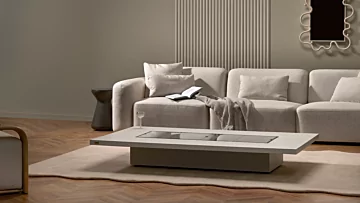
La plaque de protection en verre mérite une attention particulière, car elle transforme profondément l'utilisation tout au long de l'année. Pendant les mois les plus chauds, elle convertit la table brasero en mobilier extérieur élégant pour les usages quotidiens. Placez-la à côté de votre salon de jardin comme table basse lors des après-midis de printemps. Utilisez-la comme surface de service pour les barbecues d'été.
Cette convertibilité distingue les tables cheminées des braseros dédiés. Vous investissez dans un mobilier adaptable, plutôt que dans un élément de cheminée qui reste inutilisé la moitié de l'année.
Choisir une table cheminée revient avant tout à évaluer honnêtement la façon dont vous l'utiliserez réellement. Commencez par l'emplacement : si l'utilisation en intérieur compte pour vous, le bioéthanol devient votre seule option.
Réfléchissez à votre tolérance à la gestion du combustible. Une flamme au gaz naturel ininterrompue séduit certains propriétaires, tandis que d'autres préfèrent la simplicité du bioéthanol à la complexité d'une installation de conduite de gaz.
Évaluez les contraintes d'espace avec réalisme. Les modèles généreux créent de superbes points focaux dans de vastes pièces extérieures, mais peuvent écraser les cours plus modestes. À l'inverse, les modèles compacts adaptés aux espaces intimes peuvent se perdre dans de grands espaces de réception.
Pensez à la longévité. Les tables de cheminées de qualité, dotées de systèmes de sécurité certifiés et de matériaux haut de gamme, coûtent plus cher au départ, mais offrent des performances fiables pendant des années.
Votre table cheminée doit donner l'impression d'être une extension naturelle de votre espace de vie, inviter les personnes à se rassembler, favoriser les liens et transformer les soirées ordinaires en moments mémorables. Grâce aux connaissances acquises dans ce guide, vous êtes prêt à choisir une table cheminée qui offre précisément cette expérience.